
AI Agents are poised to upset the RPA Industry

The emergence of autonomous AI agents represents a major leap forward in automation capabilities compared to rigid RPA bots. As agents become viable alternatives for workflow automation, they pose an existential threat to RPA’s relevance in modern IT environments.
Robotic process automation (RPA), is aimed to streamline business operations by programming software “bots” to carry out repetitive, rules-based digital tasks previously performed manually by human workers. By automating workflows spanning data transfers, file processing, email handling and more, RPA promises improved operational efficiency and reduced costs.
However, RPA adoption remains limited with large enterprises citing barriers around bot fragility, inflexibility and the inability to handle unstructured data. As alternative forms of process automation gain intelligence, RPA risks becoming obsolete.

What Are AI Agents?
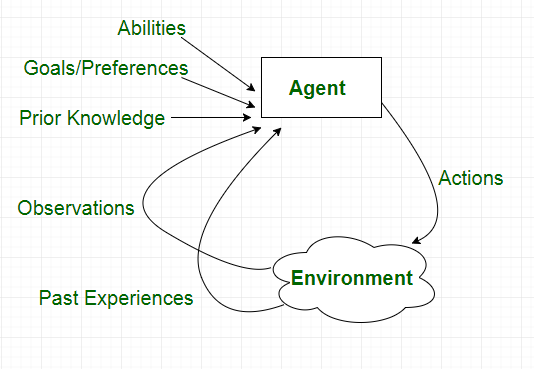
AI agents (or GPT Agents, or GPTs) are goal-driven programs powered by large language models and customizable through prompt engineering. They use natural language prompts to perform specialized skills and semi-autonomous behaviors aimed at completing assigned objectives.
How do AI Agents Work?
AI Agents leverage large language models such as GPT-4 from OpenAI or Claude from Anthropic – as the core AI to comprehend prompts and take informed actions through integrated tools and APIs.
The prompts provided to agents instructions, context, permissions and goals that determine their responsive behaviors. Careful prompt engineering allows configuring agents to operate efficiently within domains from creative content generation to data analytics collaboration and more.
Agents interface with users via conversational channels or through automated pipelines. Ongoing interaction between users and AI agents allow steadily improving their expertise in assigned tasks through prompt tuning and feedback incorporation cycles.
The Power of Prompt Engineering
A key advantage of AI agents compared to traditional bots is the depth of control prompt engineering provides in directing their behaviors aligned to specific business needs. Prompt recipes standardize instructions that activate agents by defining key elements:
- Personas – adopt appropriate tone, speaking style and opinions
- Parameters – fine-tune the creativity and randomness levels
- Tasks – clear objectives and requests
- Context – relevant information sources
- Constraints – set behavioral boundaries
As prompt recipes accumulate test results, users can catalog patterns that yield optimal responses from agents. Reusing and building upon prompt modules boosts the efficiency of configuring AI agents, whether through conversational channels or automated through internal triggering systems.
Over time, entire reusable prompt libraries can be shared across teams to speed up prompting development. This modular approach maximizes agility in leveraging AI agents for diverse applications from customer services to procurement operations.
Autonomous Agents with API Connectivity
While early RPA bots followed strict rules and protocols for routine digital tasks, AI agents can function far more autonomously with external API connectivity. By granting permission and access within prompts, agents can:
- Query databases to retrieve records matching dynamic criteria
- Leverage APIs from services like Stripe and Slack to take transactional actions
- Run code snippets and leverage computational tools to complete intermediate steps
- Synthesize analysis from outputs generated through tooling integrations
- Chaining actions through API-connected tools allows agents to complete sophisticated multi-step workflows beyond what brittle old-guard bots can attempt.
Rich integrations also enable agents to accumulate external knowledge, learning continuously from digital experiences. This combination of deep tooling connectivity and lifelong learning forms a positive feedback cycle that makes agents increasingly effective and self-directed over time.

The Obsolescence Risks to RPA
Today RPA automation primarily handles high-volume, repetitive digital tasks with minimal workflow variations, such as customer data transfers, invoice processing and employment onboarding paperwork. However, AI agents are rapidly matching and exceeding the capabilities underlying these use cases:
- Prompt engineering for variability – Unlike bots failing when workflows change, agents can be reconfigured through updated prompts to handle new requirements and exceptions.
- Dynamic optimization – Agents continuously adapt from input to prompt their own enhancements whereas bots follow static programs.
- BROAD integration connectivity – Agents interoperate with far more systems via API connections than internally limited bots can.
- Unstructured data handling – Agents understand language and content directly whereas bots require structured inputs.
Essentially agents can be instantly updated to what bots require prolonged development cycles to achieve. And reconfiguring agents is far cheaper than bot maintenance or replacement.
Over time, the superiority of agent automation economics risks shrinking RPA addressable market share. The general limitations of bots in flexibility, connectivity and learning ability make them prime disruption targets.
Architecting the Future of Automation
Make no mistake – RPA served an important role in progressing enterprise digital transformation and unlocking value from legacy systems through task automation. But AI changes everything.
Looking ahead, while routine rule-bound workflows remain in the realm of bots, processes requiring reasoned decision making, exception handling, and high adaptability will transition towards AI agents and complementary human-agent collaboration.
The key for enterprises is architecting a strategy balancing intelligent automation with meaningful augmentation of individual employees through digital tooling. The goal should be leveraging AI’s tireless throughput for tasks machines exceed at, while empowering humans to focus on high-judgment activities with support from agent collaborators.
However, the risks of over automation, deskilling workforces too aggressively and becoming over reliant on AI vendors cannot be ignored. Maintaining responsible governance and monitoring will be vital through the transition towards an automation paradigm powered by AI agents.

Conclusion – AI Agents deliver on the unfulfilled promises of RPA
RPA introduced the vision of enterprise automation but agent AI realizes far greater potential while minimizing limitations around brittleness and disconnectedness. Leveraging prompt engineering and API-connectivity, customizable agents like ChatGPT can reshape workflows through their responsiveness and interoperability.
As vendors react with band-aid upgrades, RPA faces pressure from directly competitive and philosophically superior AI automation alternatives. The writing may be on the wall for first-generation task bots. Their once revolutionary novelty now risks decline into obsolescence as AI agents take center stage.
Would you like to start a conversation about assessing your company’s ability to scale AI?
Enter your email below to receive the AI Maturity Assessment brochure.
[gravityform id=”4″ title=”true” description=”true”]

